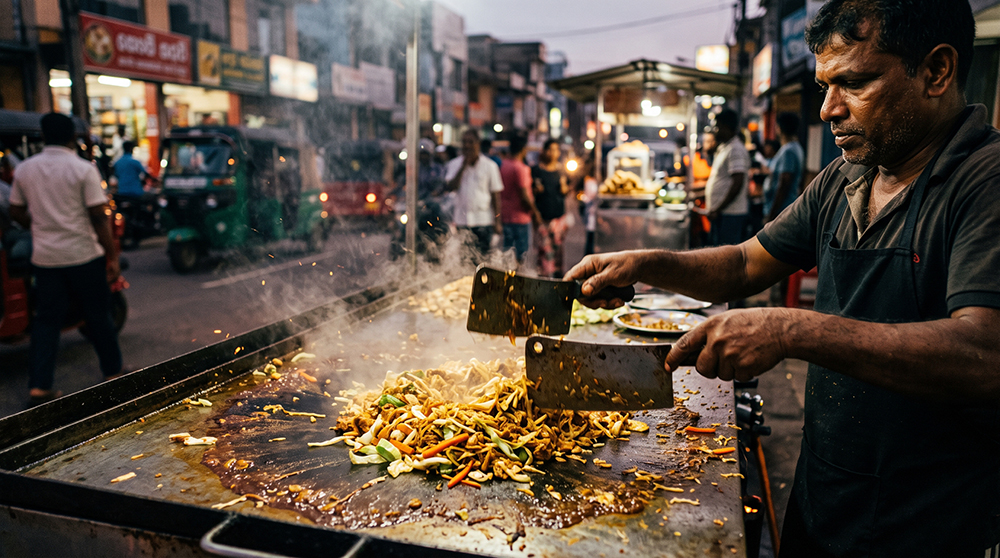
Sri Lankan kottu roti is more than a recipe; it is one of the sounds of the island. The rhythmic clatter of metal blades chopping roti against a hot griddle can be heard from roadside food stalls, small restaurants, and busy city streets, especially in the evening.
The secret to great kottu is not complicated ingredients. It is the combination of high heat, finely chopped ingredients, good seasoning, and constant movement on the griddle.
Step 1 — Prepare the Roti
Cut the godhamba roti into small strips or bite-sized pieces.
For the best texture, use roti that is slightly firm rather than extremely soft. This allows the pieces to hold their shape while being chopped and fried.
Step 2 — Prepare the Ingredients
Shred or finely chop the cooked chicken.
Slice the onion, carrot, cabbage, green chilli, spring onions, ginger, and garlic.
Having everything prepared before cooking is important because kottu comes together quickly once the griddle becomes hot.
Step 3 — Heat the Griddle
Place a large flat pan, cast-iron skillet, or griddle over medium-high to high heat.
Add the vegetable oil and allow it to become hot.
Add the curry leaves, onion, ginger, garlic, and green chilli.
Stir-fry until the onion begins to soften and the spices become fragrant.
Step 4 — Add the Vegetables
Add the cabbage, carrot, and spring onions.
Season with salt, black pepper, turmeric, chilli powder, roasted curry powder, cumin, and coriander.
Toss everything together over high heat.
The vegetables should remain slightly crisp rather than becoming completely soft.
Step 5 — Add the Chicken
Add the cooked chicken to the griddle.
Mix thoroughly with the vegetables and spices.
Pour in the chicken curry gravy and stir everything together.
The curry gravy is important because it gives the kottu its characteristic savoury flavour and helps keep the roti moist.
Step 6 — Add the Eggs
Push the mixture toward one side of the pan.
Add a small amount of oil to the empty section and crack in the eggs.
Scramble the eggs lightly before mixing them into the chicken and vegetable mixture.
Cook until the eggs are fully set.
Step 7 — Add the Roti
Add the chopped godhamba roti.
Pour over the soy sauce and toss everything together.
Now comes the most recognisable part of making kottu.
Using two sturdy spatulas or suitable cooking utensils, chop and mix the ingredients repeatedly across the hot griddle.
Continue until the roti has absorbed the curry, spices, and sauces.
Step 8 — Get the Texture Right
Do not allow the kottu to become too wet.
The finished dish should be moist and flavourful but still have distinct pieces of chopped roti.
Continue tossing and chopping until the ingredients are evenly distributed and the edges of some of the roti become slightly crisp.
Step 9 — Final Seasoning
Taste the kottu.
Adjust the salt, chilli, pepper, or curry gravy according to preference.
Add the sliced spring onions near the end for freshness.
Step 10 — Serve Hot
Transfer the kottu directly from the griddle to a serving plate.
Serve immediately with extra chicken curry gravy, lunu miris, lime wedges, or your preferred chilli accompaniment. The best kottu is eaten while it is still steaming hot.
Critical Techniques
Use high heat: Kottu is traditionally cooked quickly on a hot metal griddle. High heat gives the dish its characteristic roasted flavour.
Chop everything finely: Smaller pieces allow the ingredients and sauces to mix evenly with the roti.
Do not drown the kottu in curry: Curry gravy adds flavour and moisture, but too much will turn the dish soggy.
Use leftover curry: A small amount of well-seasoned chicken curry gravy can give homemade kottu a much deeper Sri Lankan flavour.
Serve immediately: Kottu is at its best straight from the griddle.
Sri Lankan Variation
Kottu can be prepared in many different ways.
Replace the chicken with:
- Beef
- Seafood
- Egg
- Vegetables
- Cheese
- Fish
- Mixed meat
For a vegetarian version, simply omit the chicken and increase the quantity of vegetables and egg, or use additional plant-based ingredients.
For a hotter version, add extra green chilli or chilli flakes.